Collide.Check-in
A location-based professional network for Egypt.
Our work.
All projects.
A location-based professional network for Egypt.
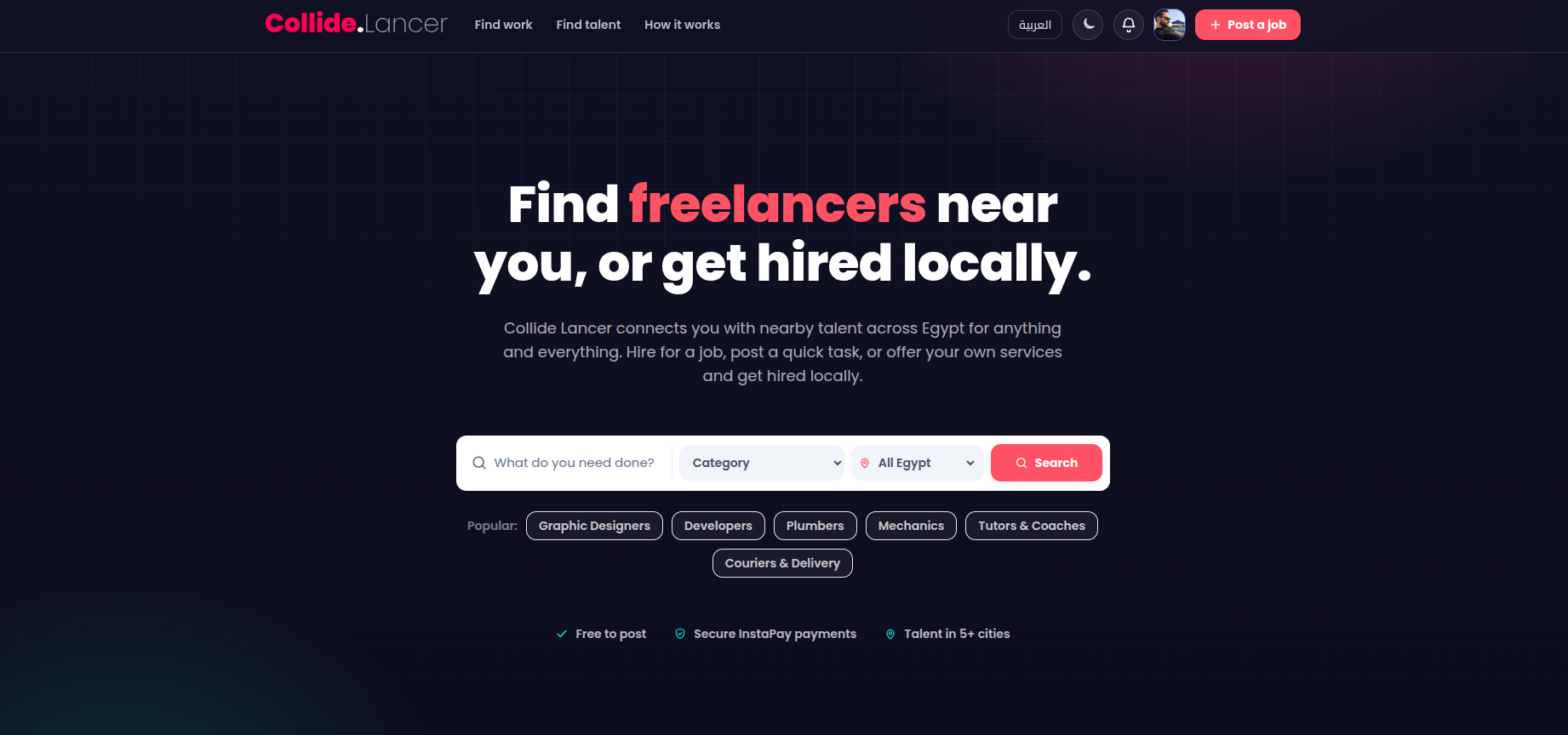
A local freelance and services marketplace for Egypt.
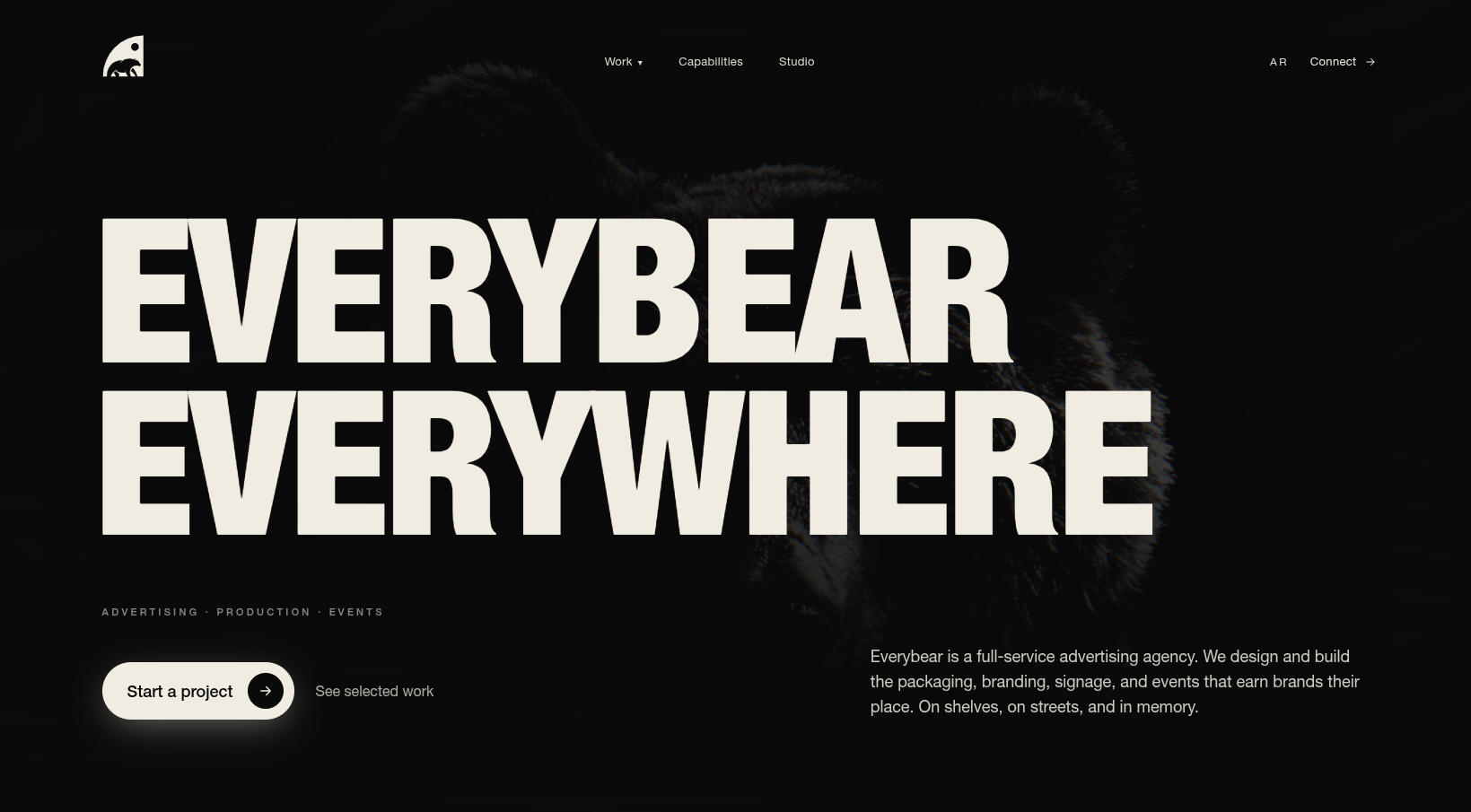
A site rebuild for a 20-year-old ad agency.
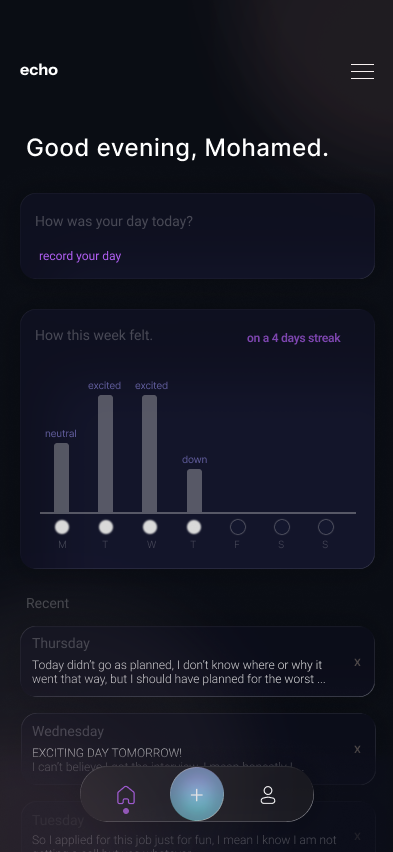
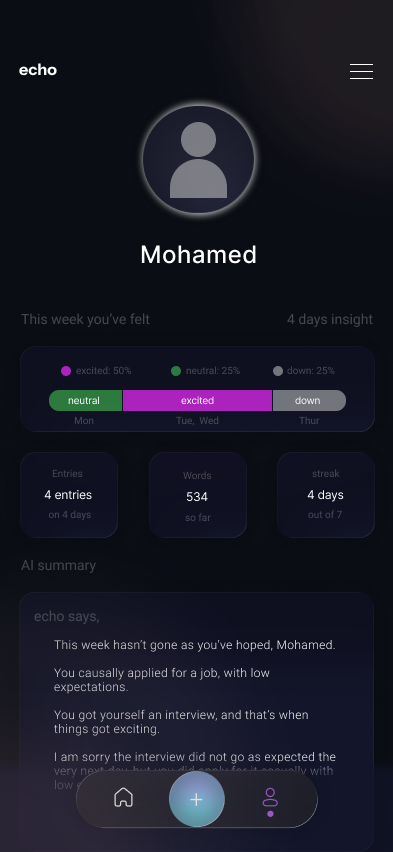
Voice journaling that reflects your week back.
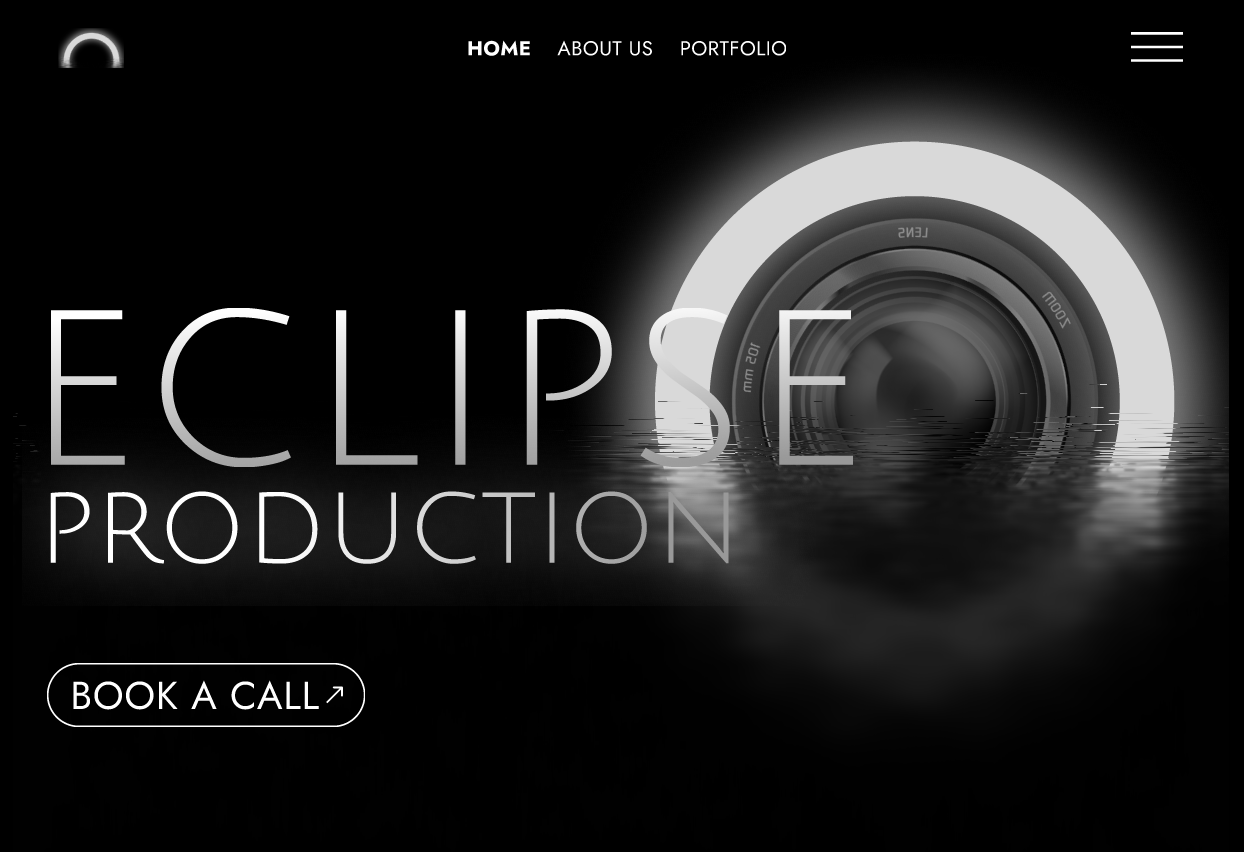
A concept production studio, built around its own story.

A concept site for an aesthetics and wellness clinic.
A location-based professional network for Egypt.
Professional networking for Cairo, built around physical presence. You check in at the café or coworking space you’re actually in, see who else is checked in there, and wave at someone interesting. When the wave is mutual, a private chat opens and the conversation moves across the room.
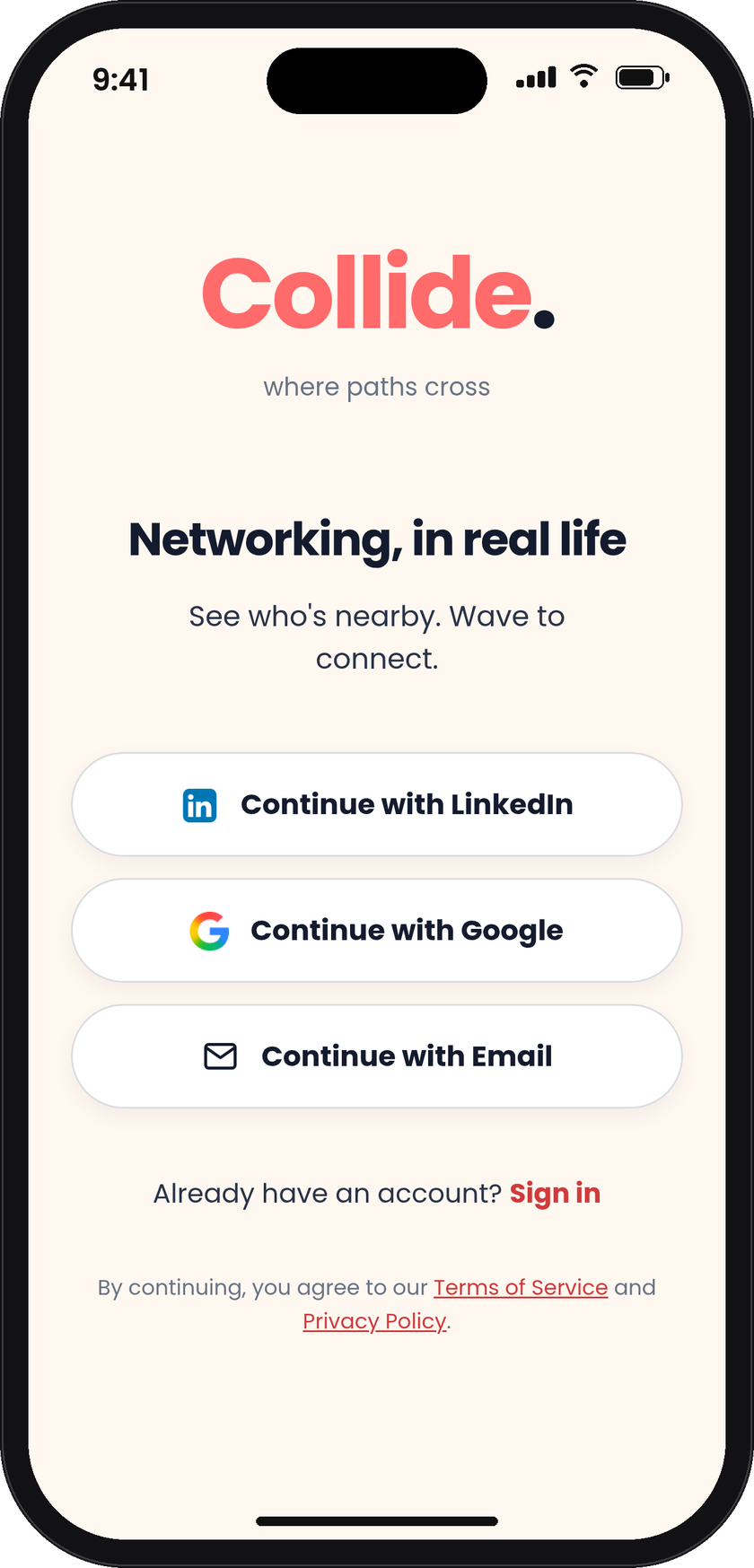
LinkedIn, Google or email. Before you check in anywhere, the home screen does one thing: it notices the venue you are standing in, says how many people are already there, and offers to put you in the room.
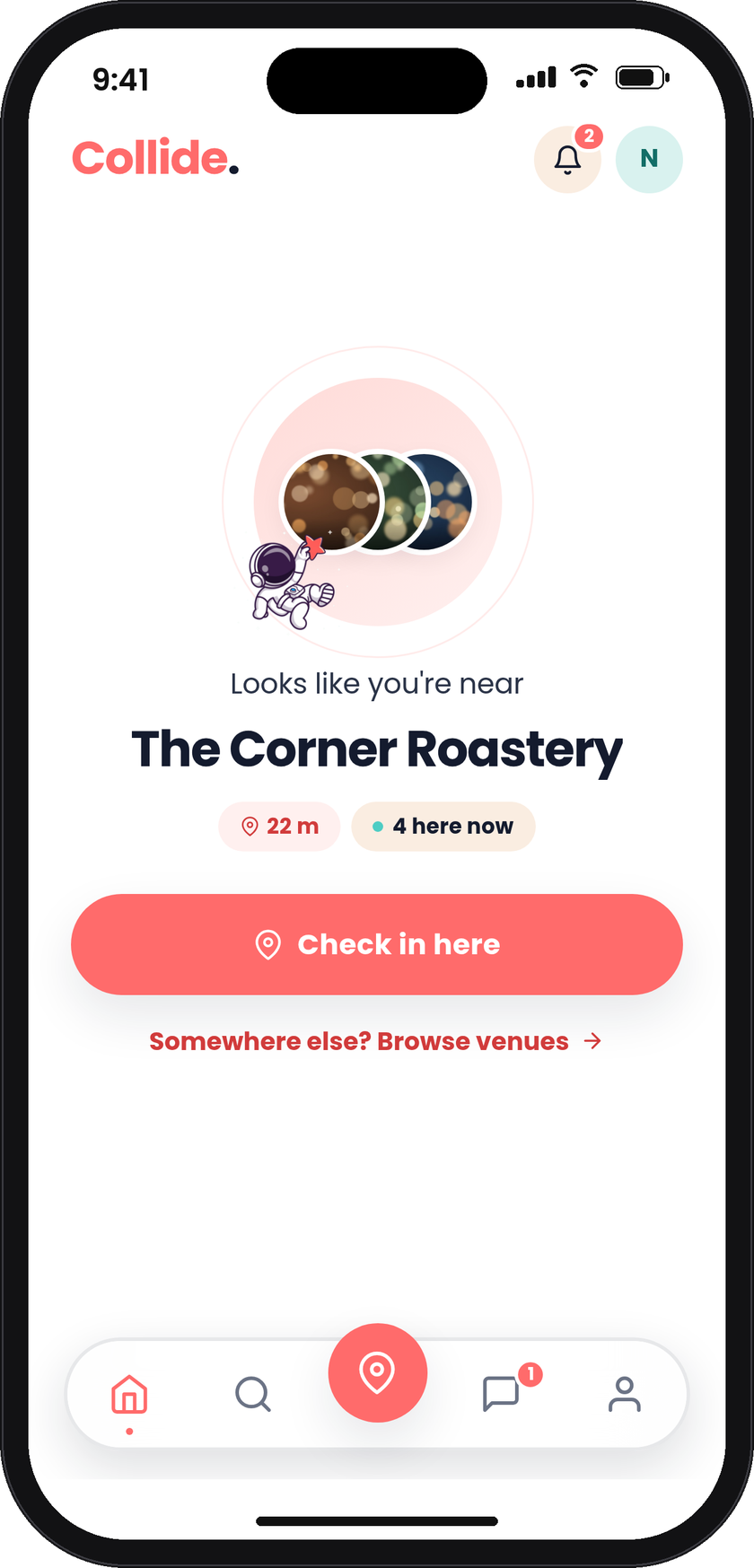
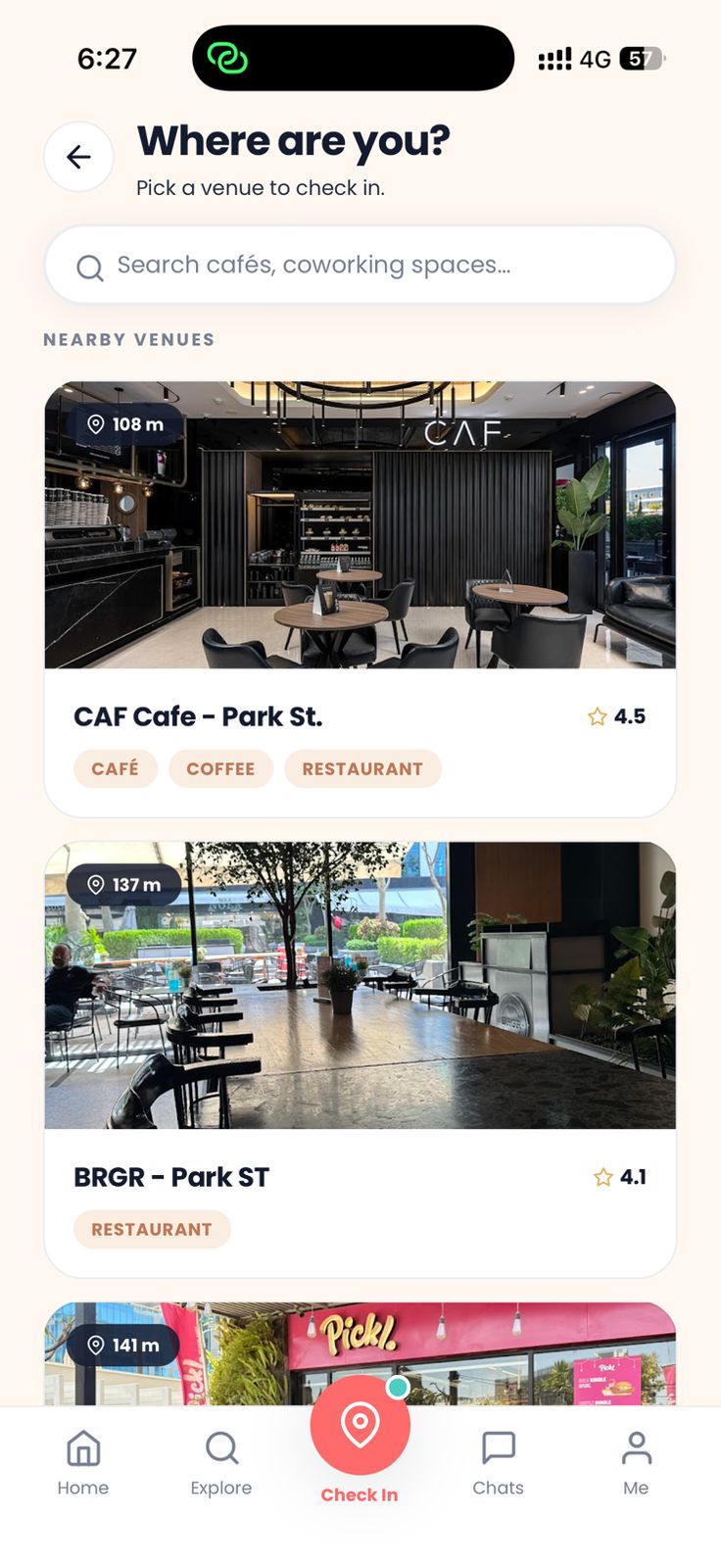
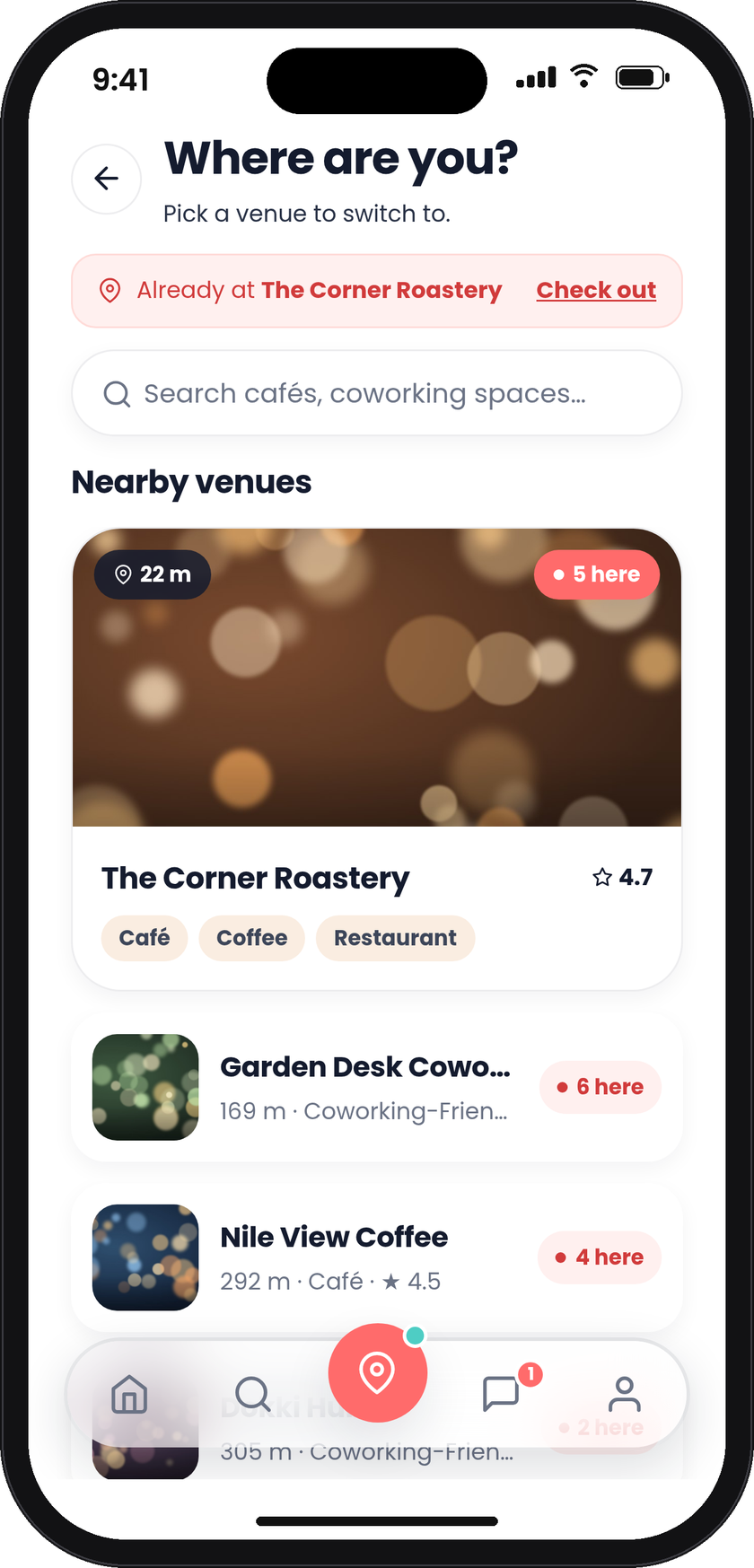
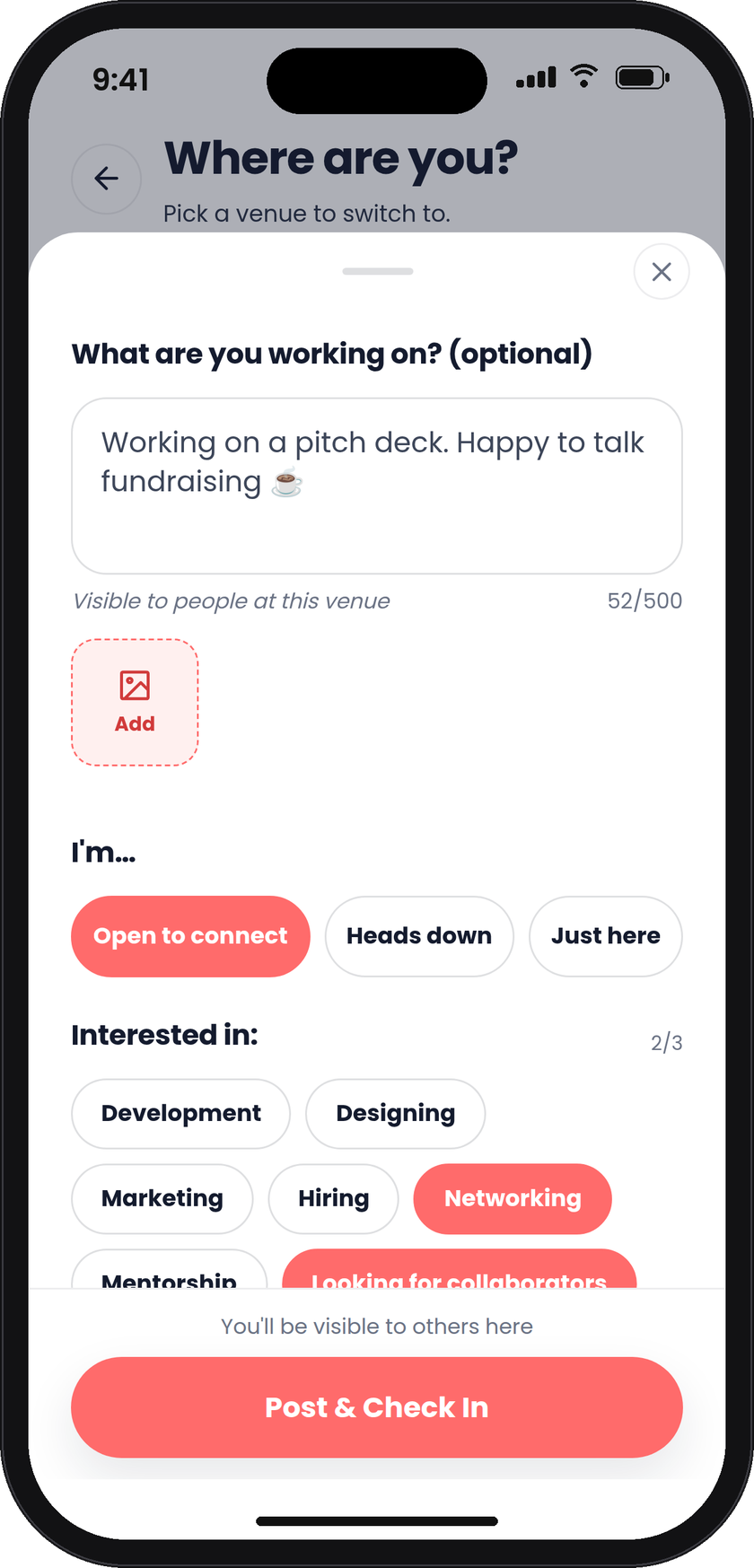
Venues come from Google Places, sorted by distance with live counts. GPS has to place you within 500 metres, and spoofed locations are rejected by the server. You set a status, up to three interests and the hour you will be checked out, so nobody stays visible after they have left.
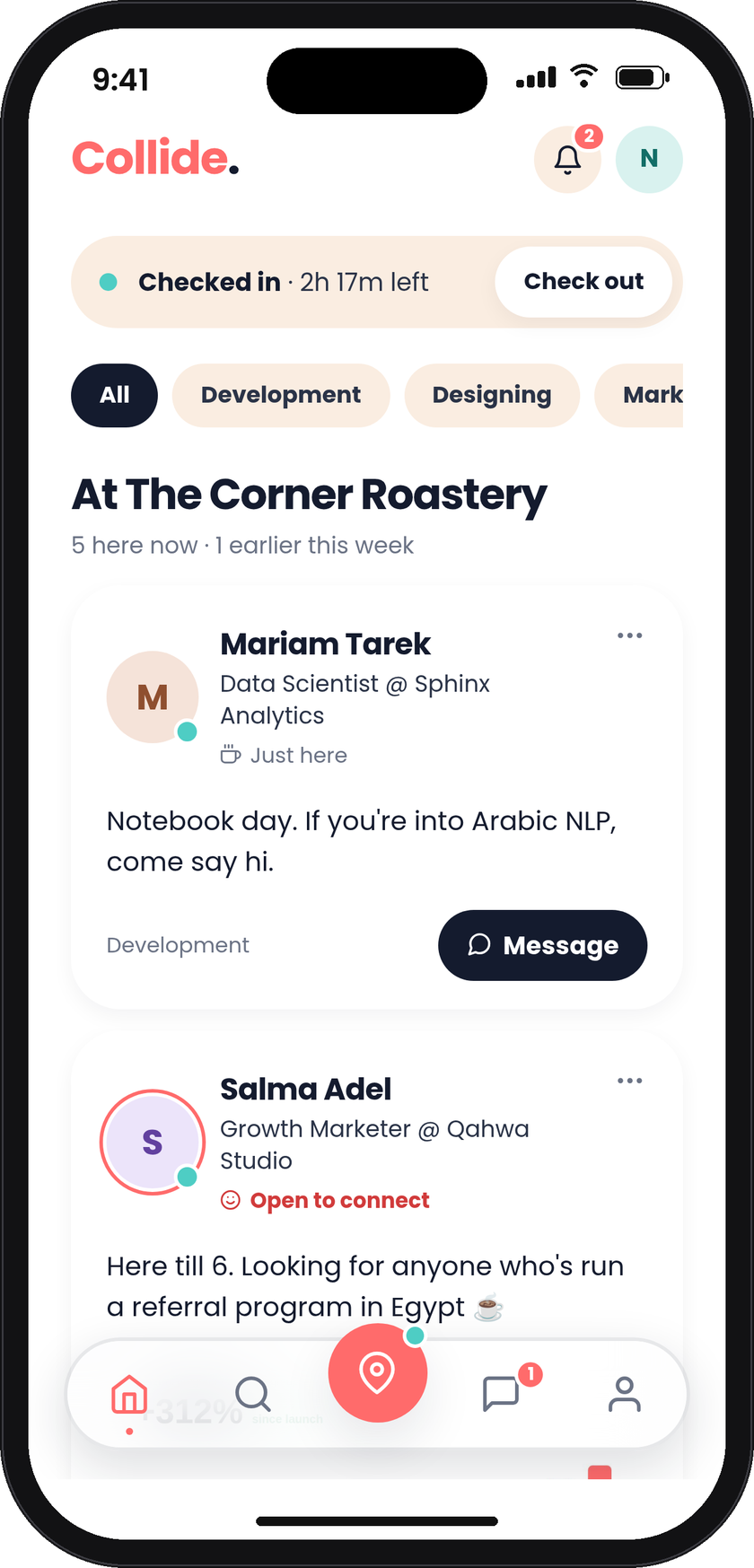
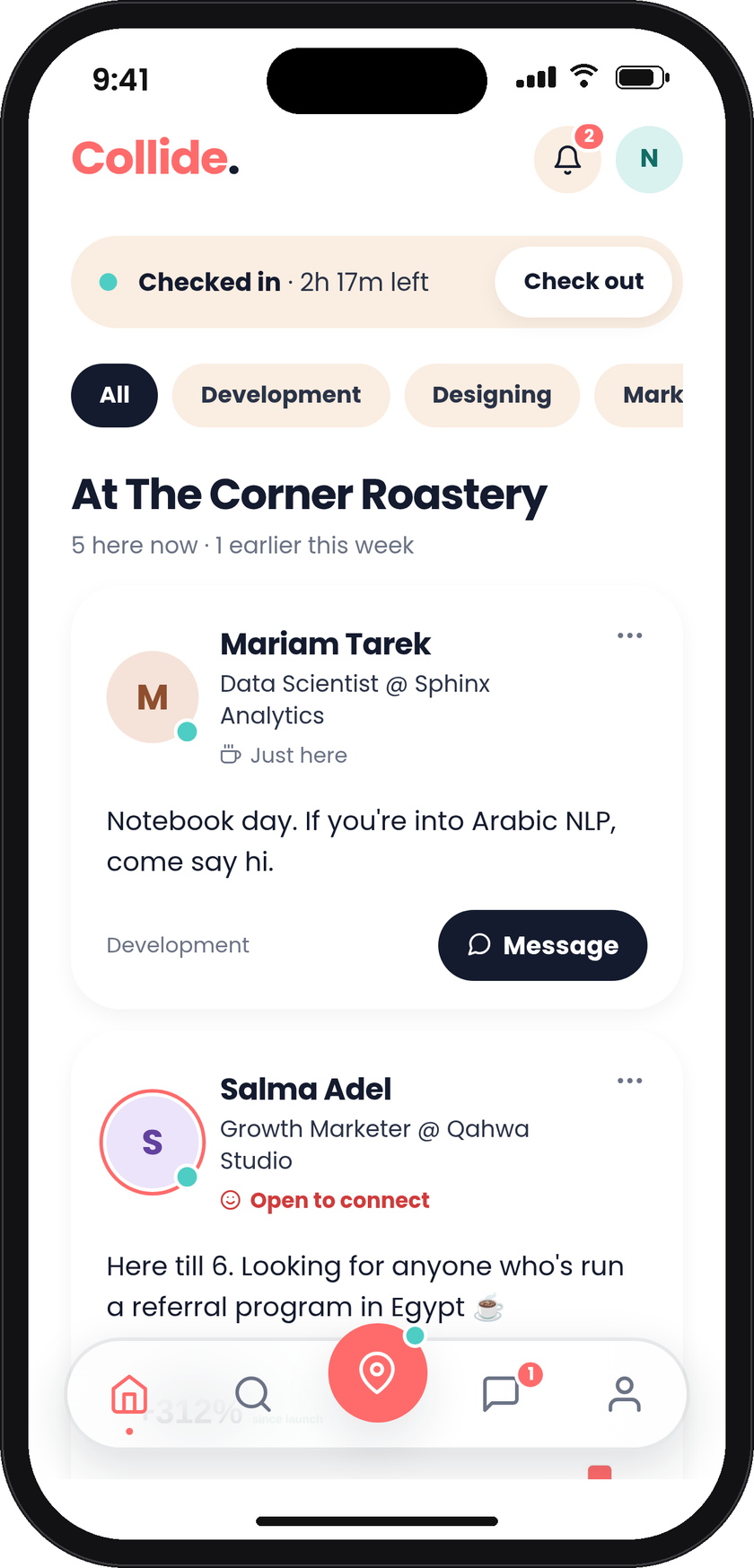
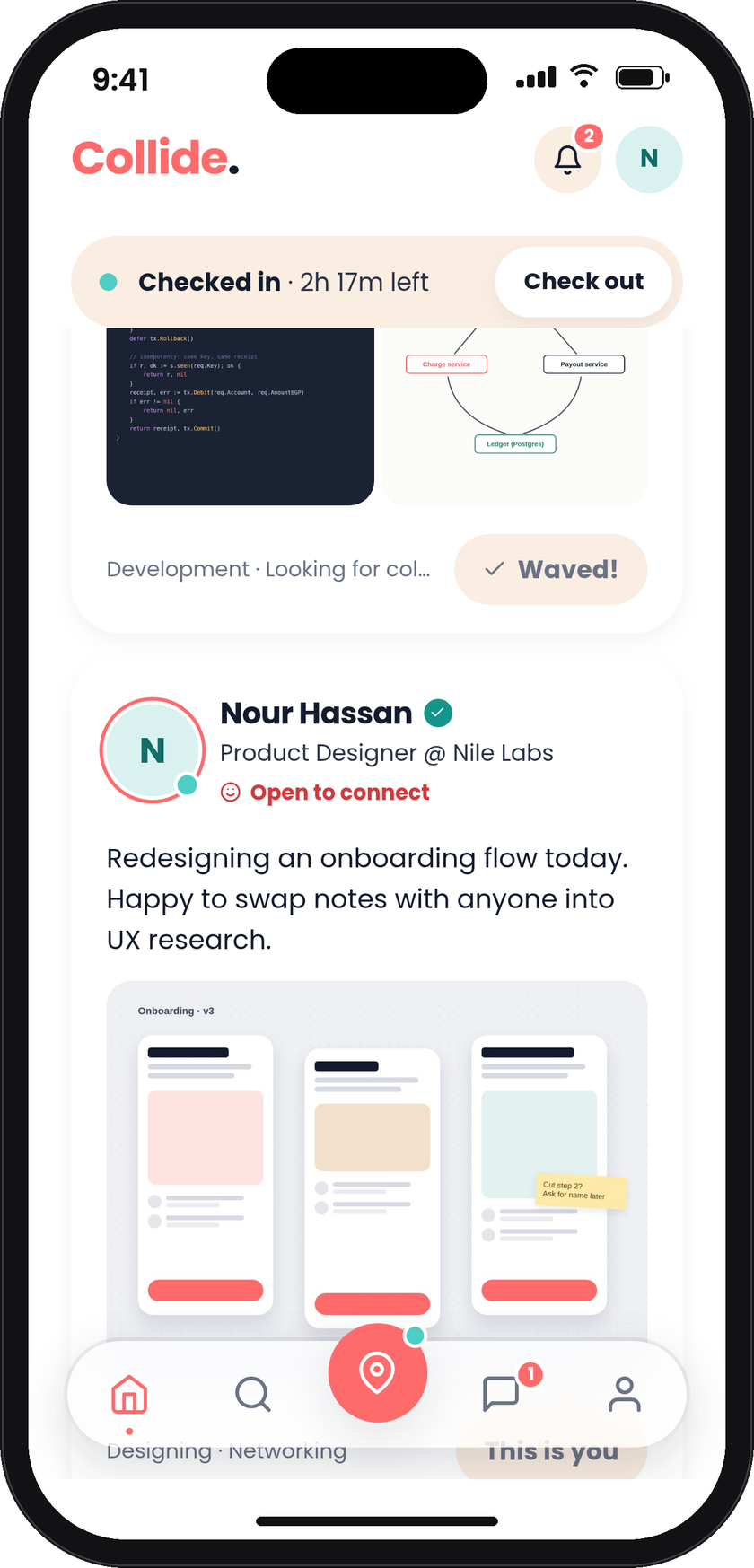
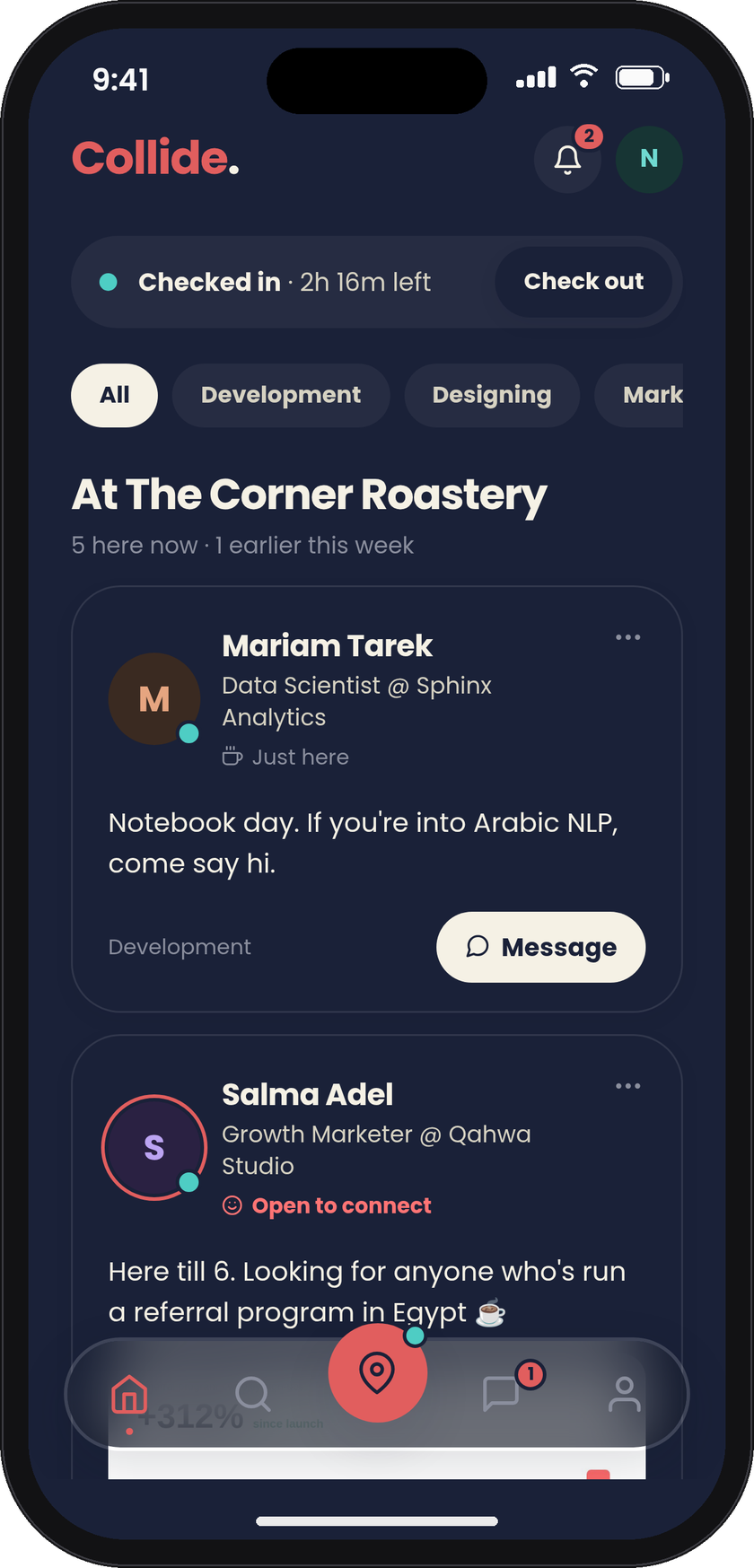
Once you are checked in you see the people checked in at the same venue, with their headline, their status and what they are working on today. There is deliberately no list of people nearby and no search. Open to connect invites a hello; heads down asks for space.
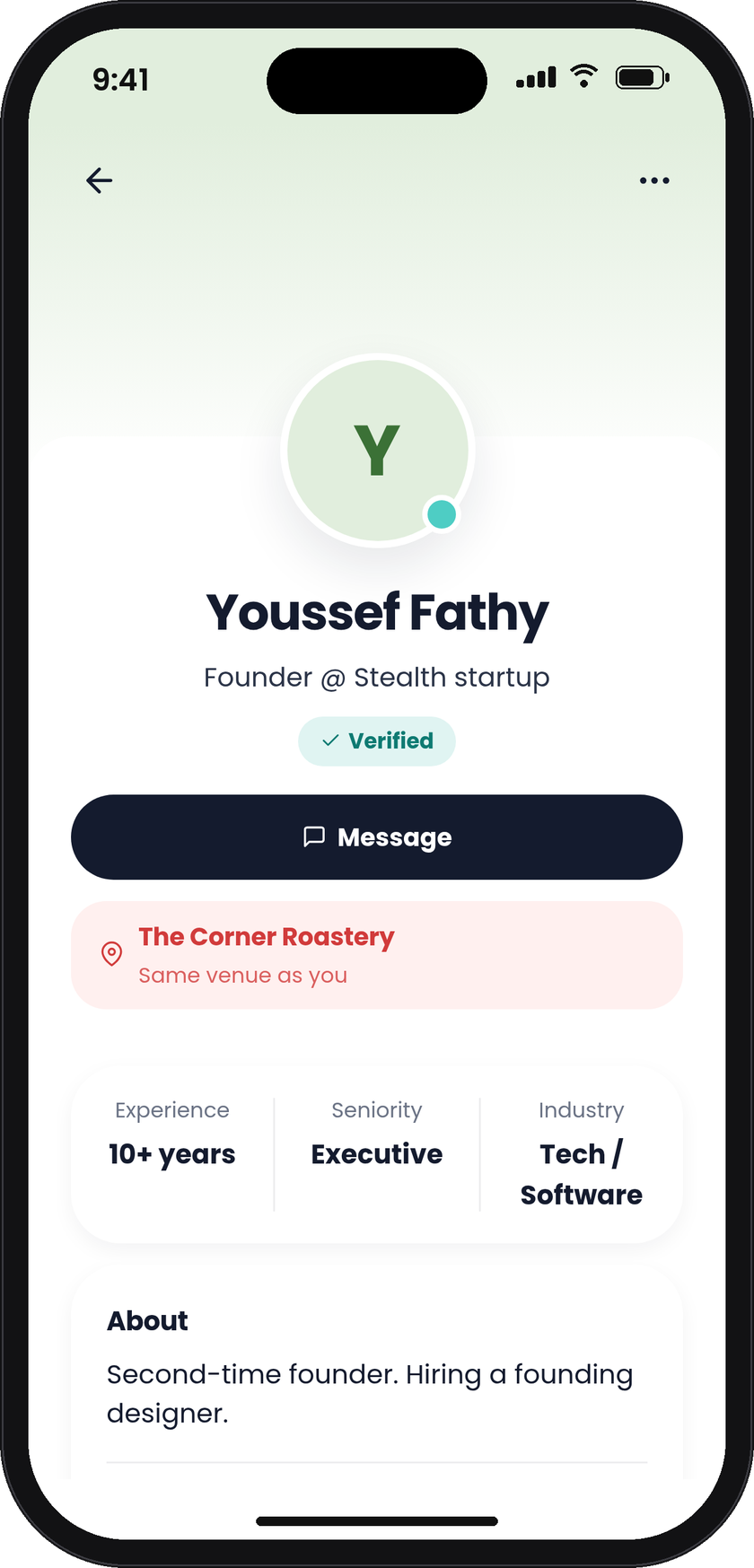
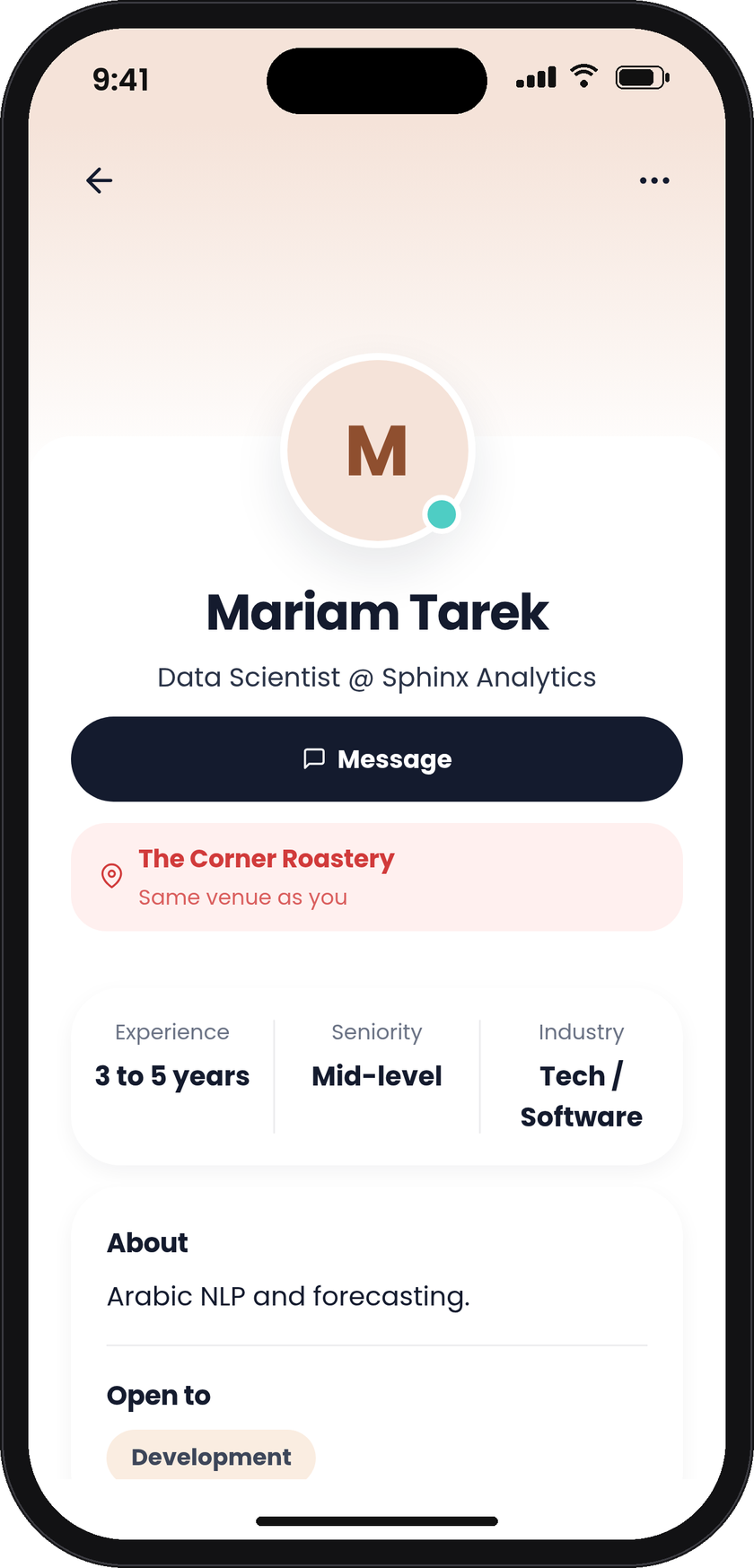
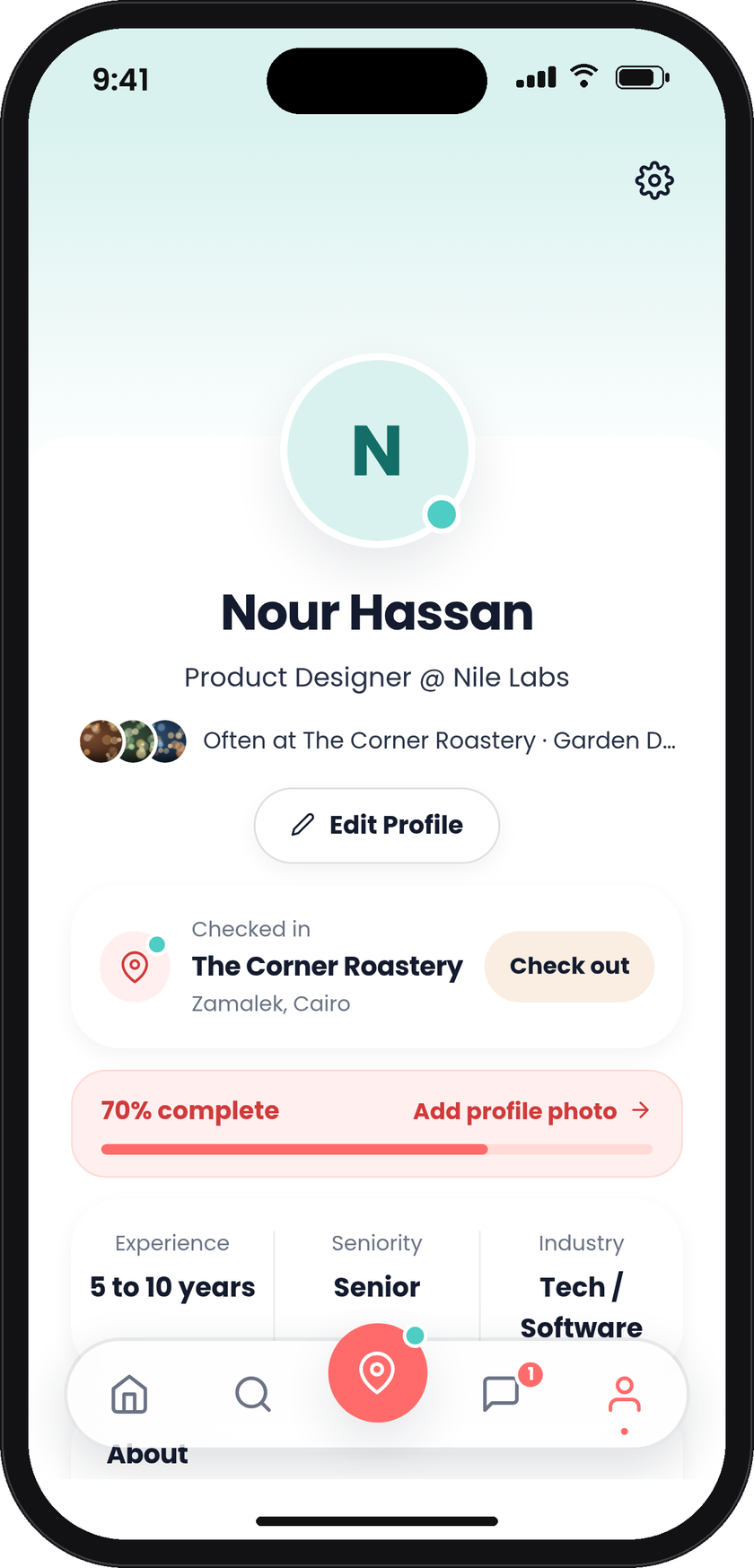
Headline, experience, seniority, industry and what someone is open to. The verified badge comes from a linked LinkedIn account and is set by the server, so nobody can award it to themselves. Only people at your venue, people you have waved with and your own chats can open a profile.
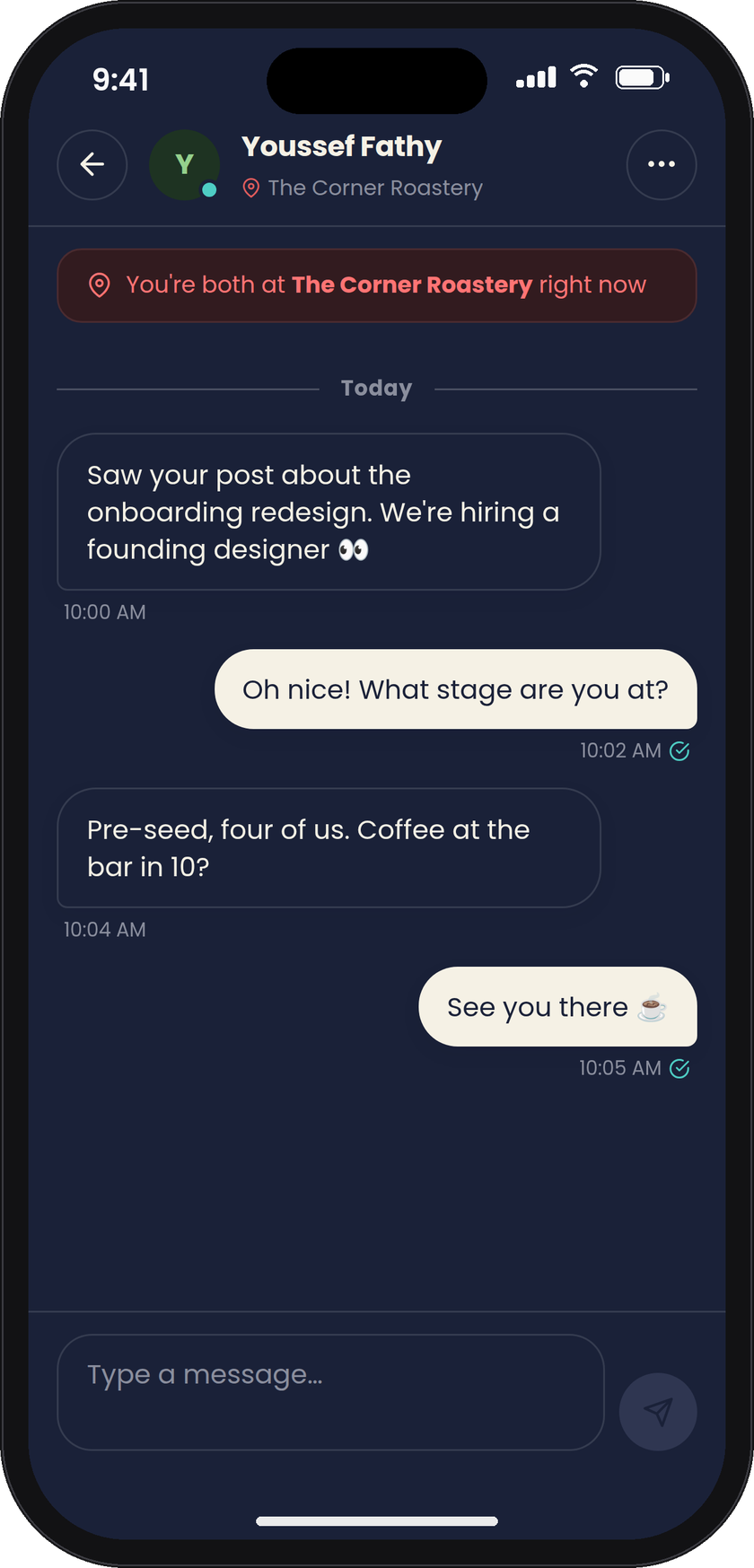
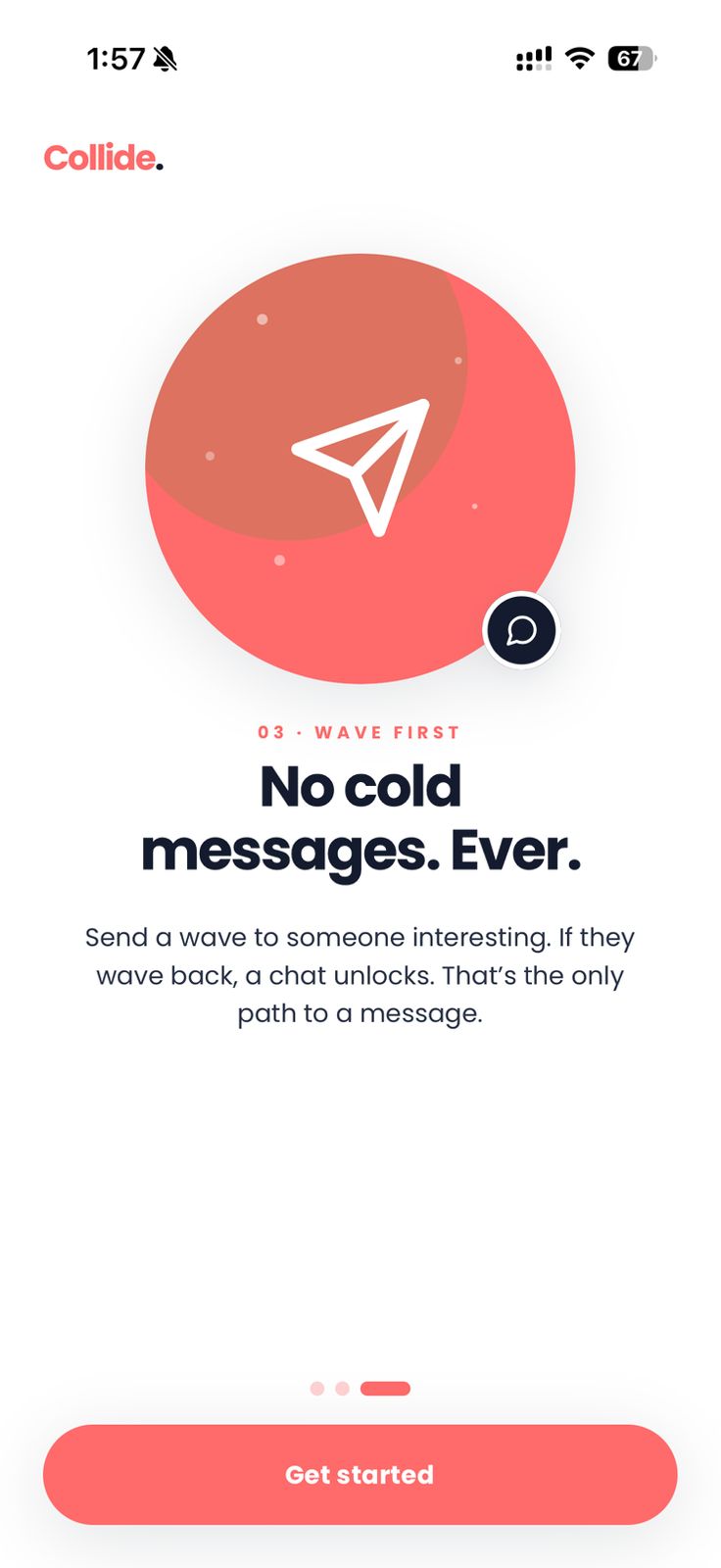
A wave is a quiet signal, and rejection is invisible: if nobody waves back, nothing happens and nobody is told. When both people wave, the server opens a conversation. There is no other way to message someone, and the database refuses messages between people who have not matched, so cold messages are impossible rather than discouraged.
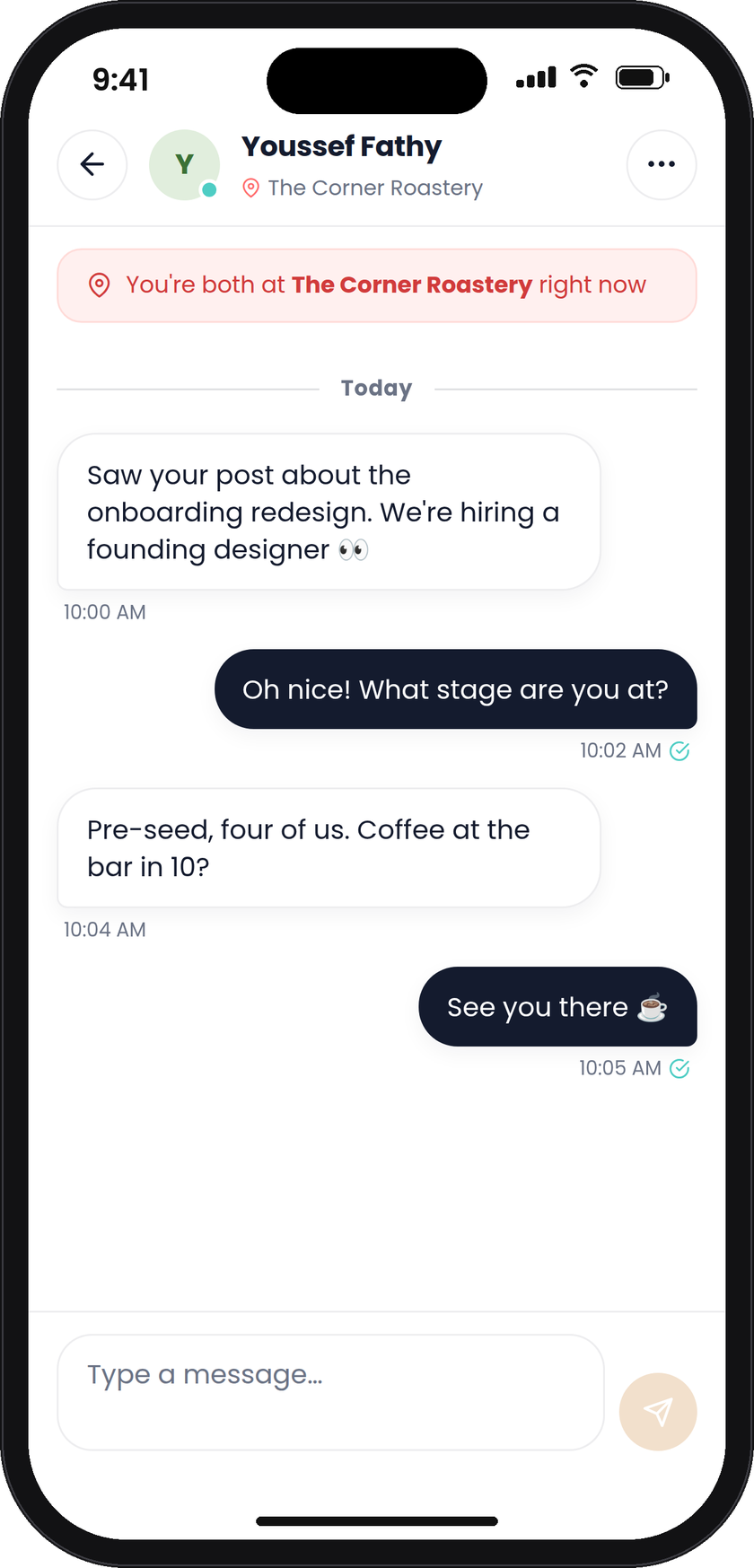
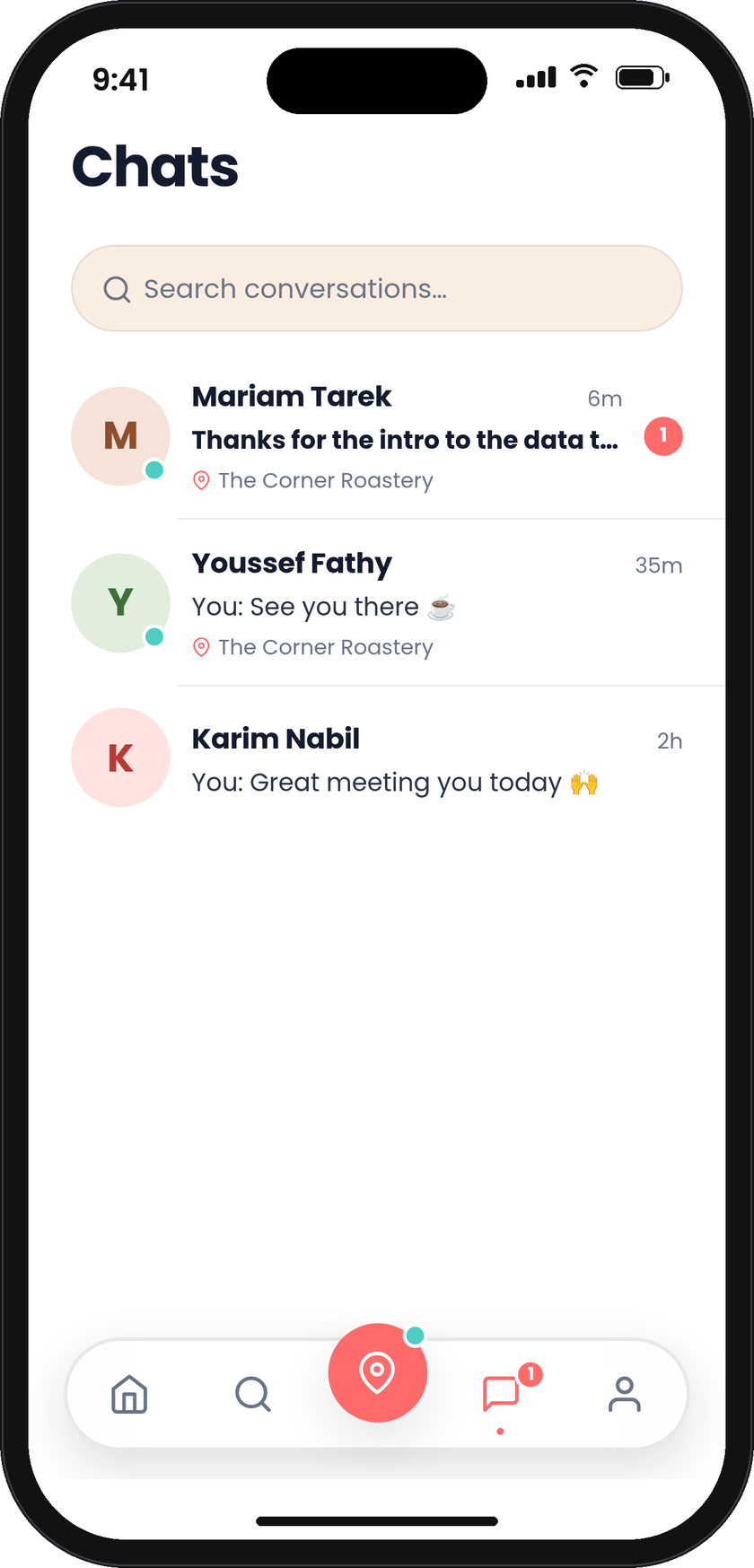
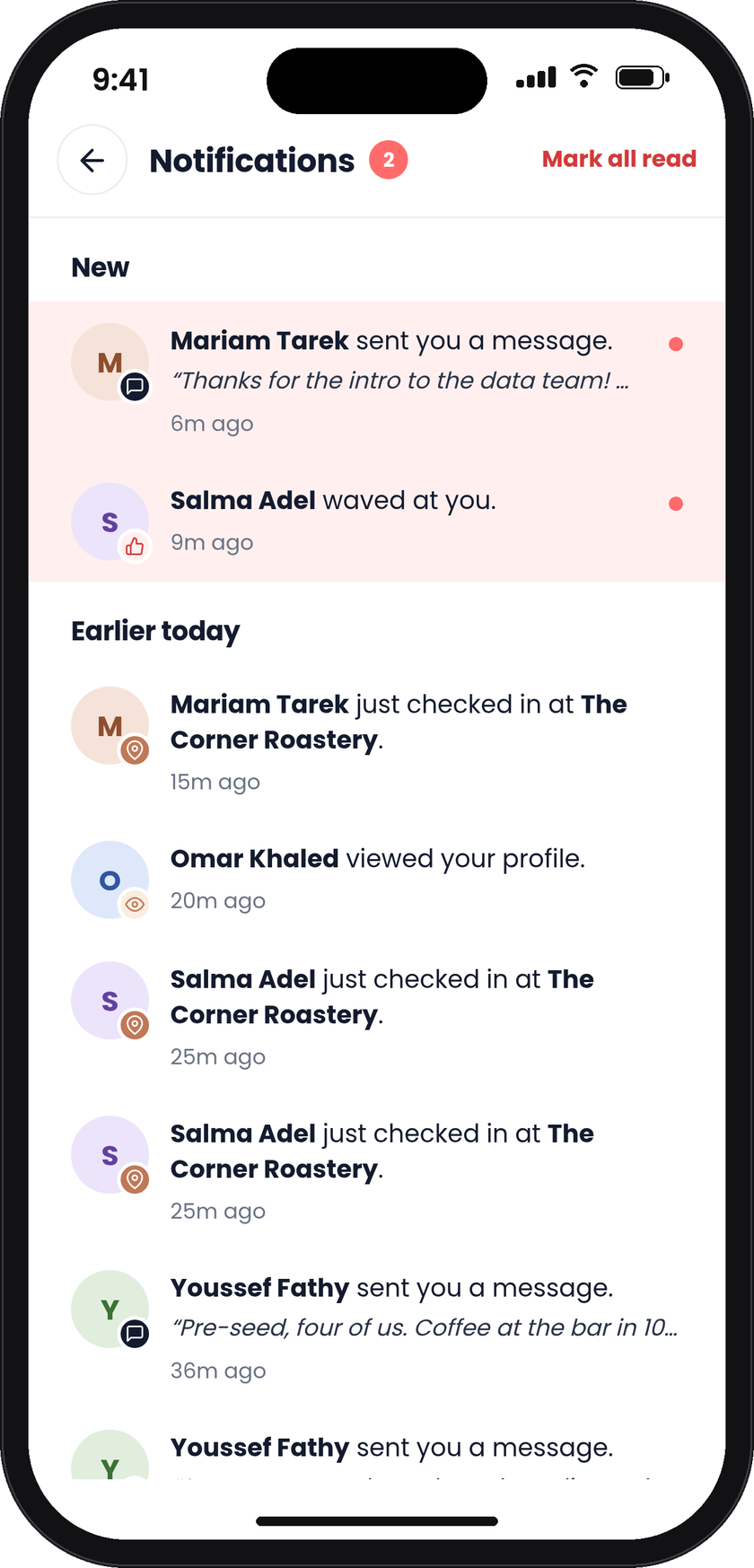
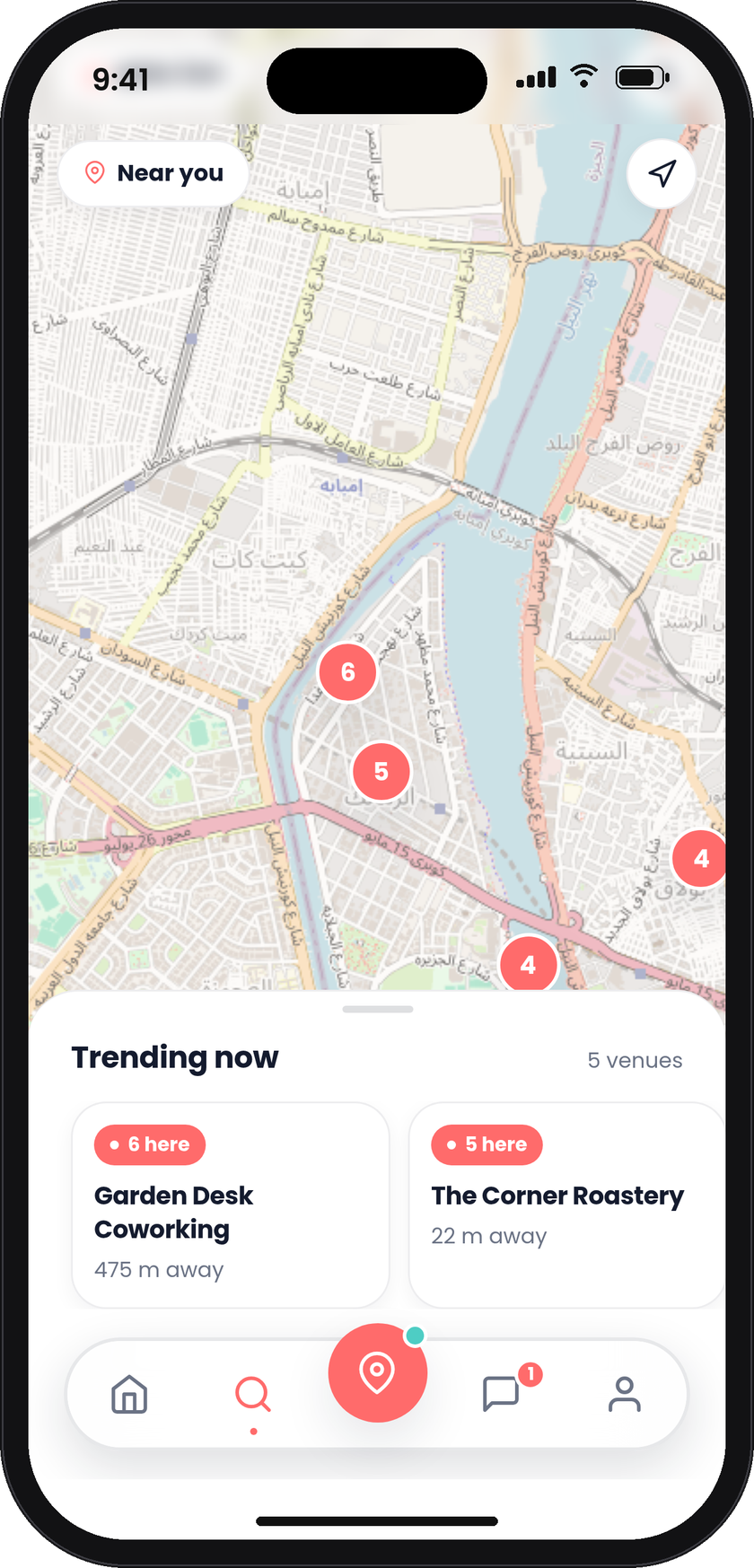
The map answers where to work today without exposing anyone. Each pin carries a count of people checked in, never names or faces. You only find out who someone is once you are checked in at the same place.
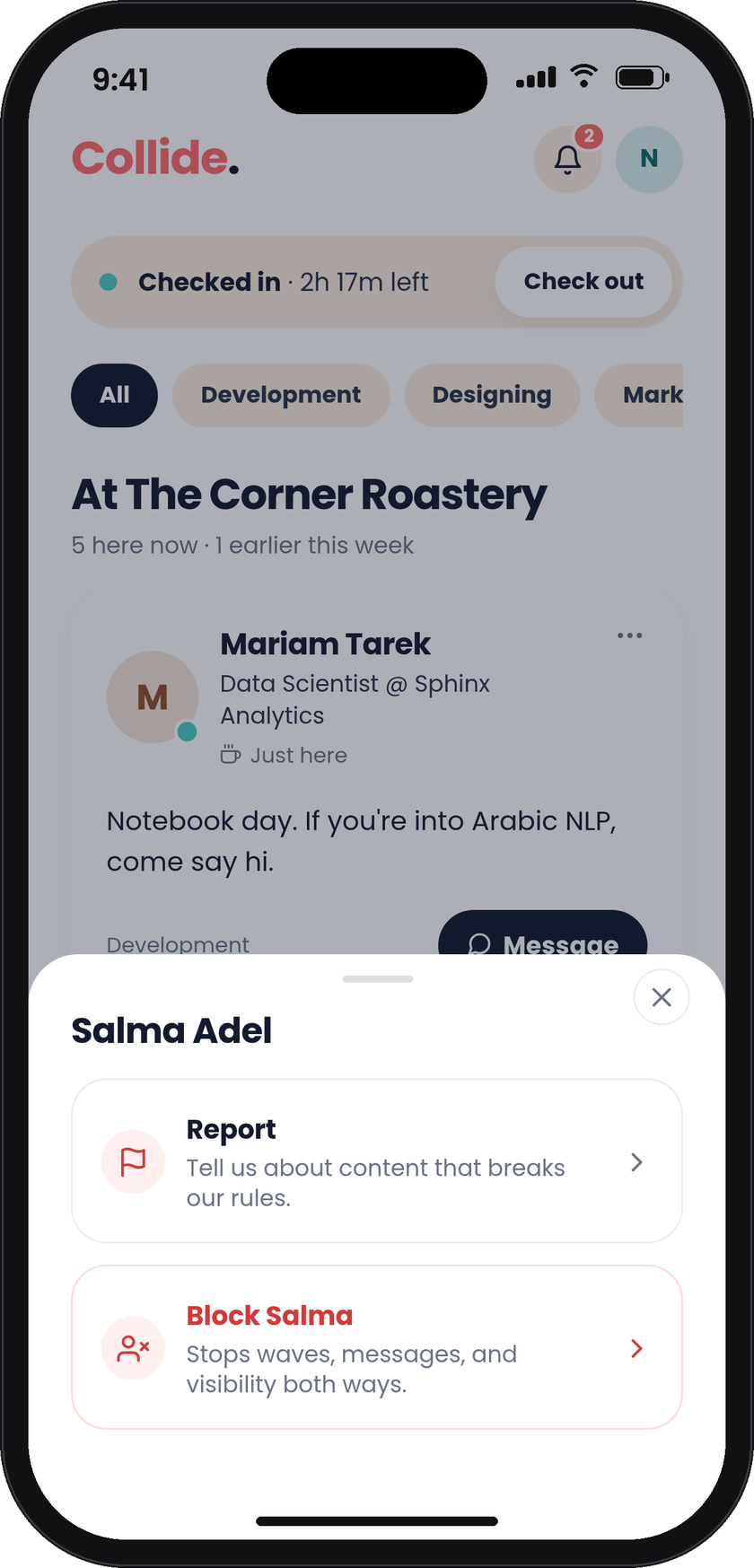
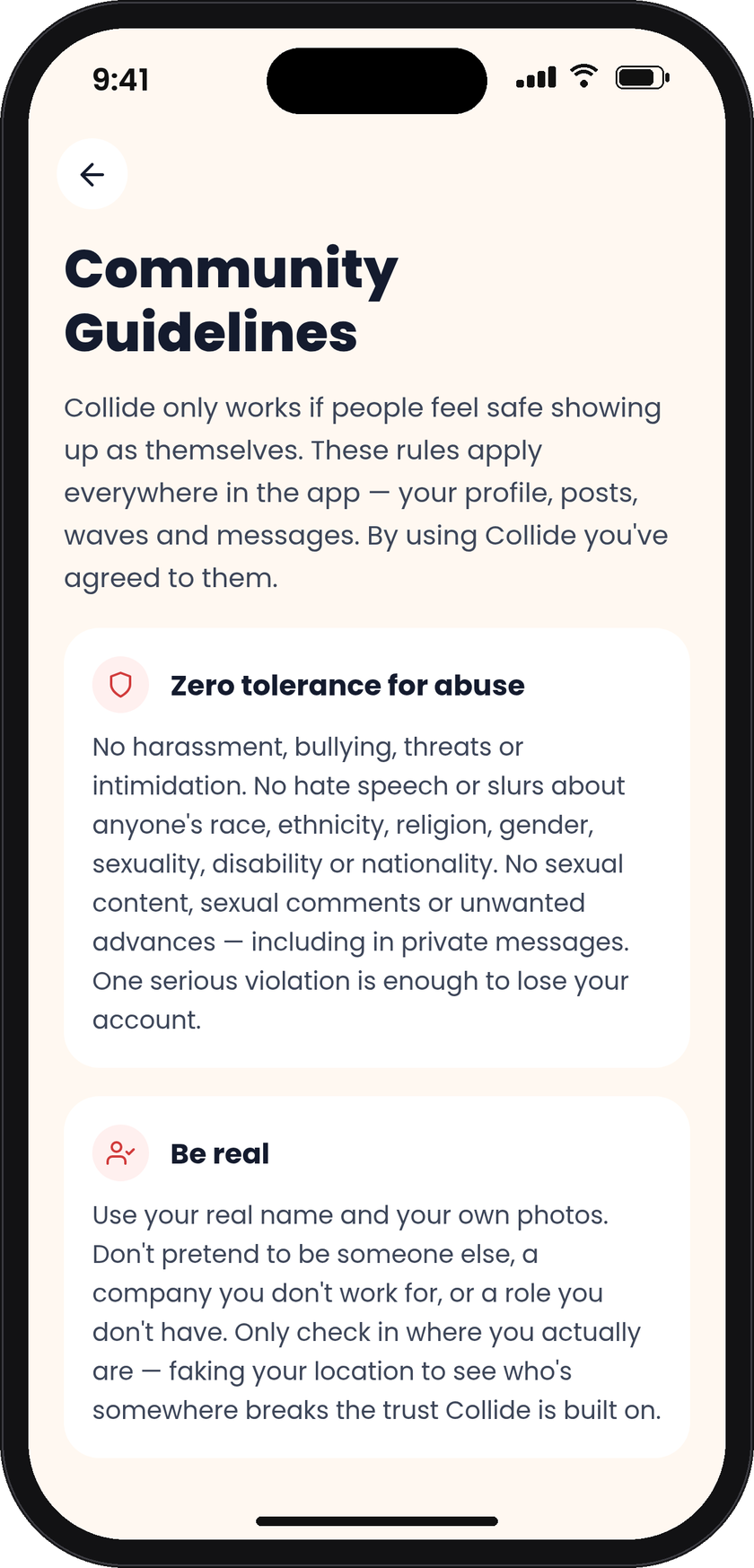
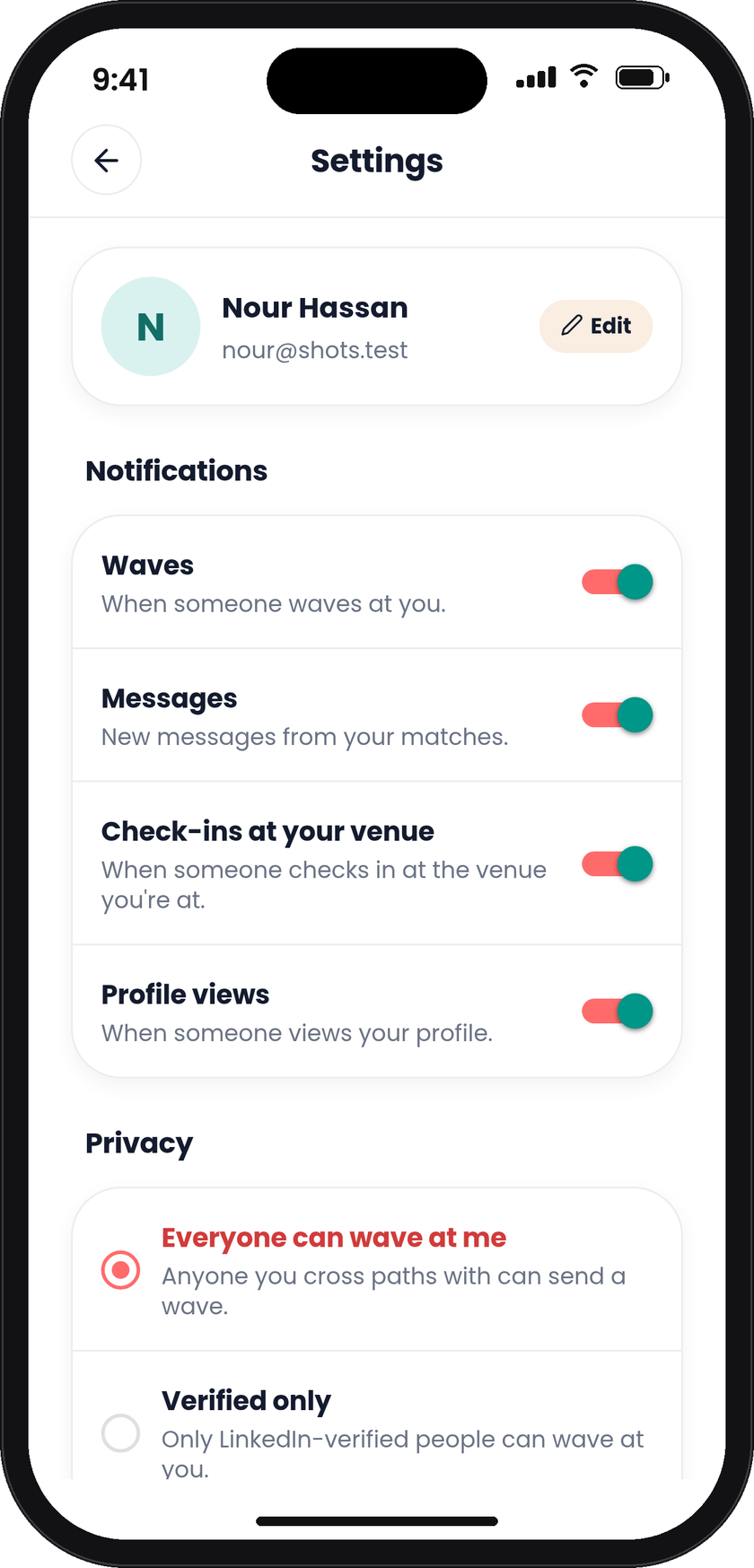
Report and block sit on every card, profile and chat. Blocking works both ways and files a report automatically. Everyone agrees to zero-tolerance guidelines, and anyone can limit who is allowed to wave at them. Underneath, row-level security decides who can see a profile, a check-in or a post, and 70 automated checks run those rules against a real Postgres: 36 attacks a malicious user would try, and 34 everyday flows that have to keep working.
Every screen works in Egyptian colloquial Arabic, the way people actually speak rather than Modern Standard boilerplate, with a fully mirrored right-to-left layout and the Cairo typeface. There is a true dark mode across the app.
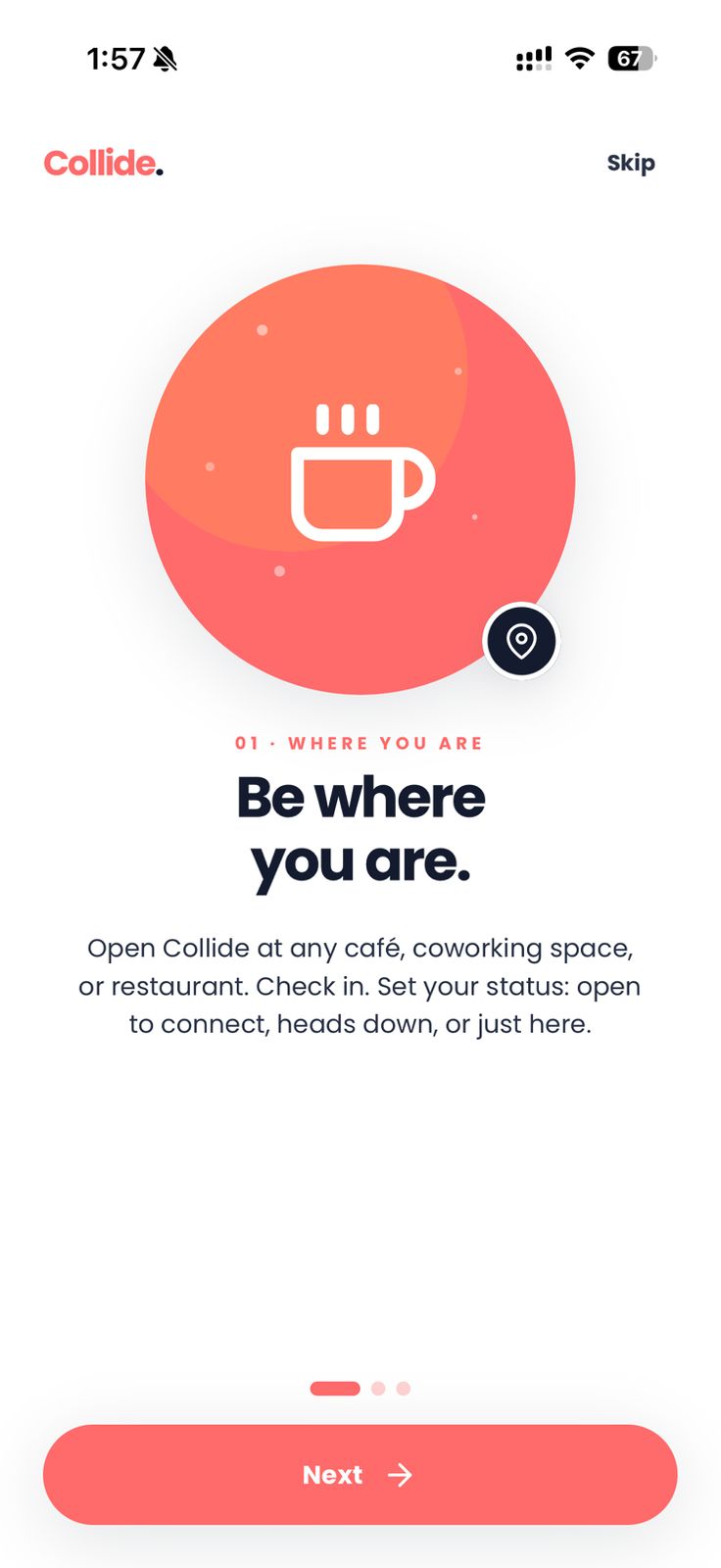
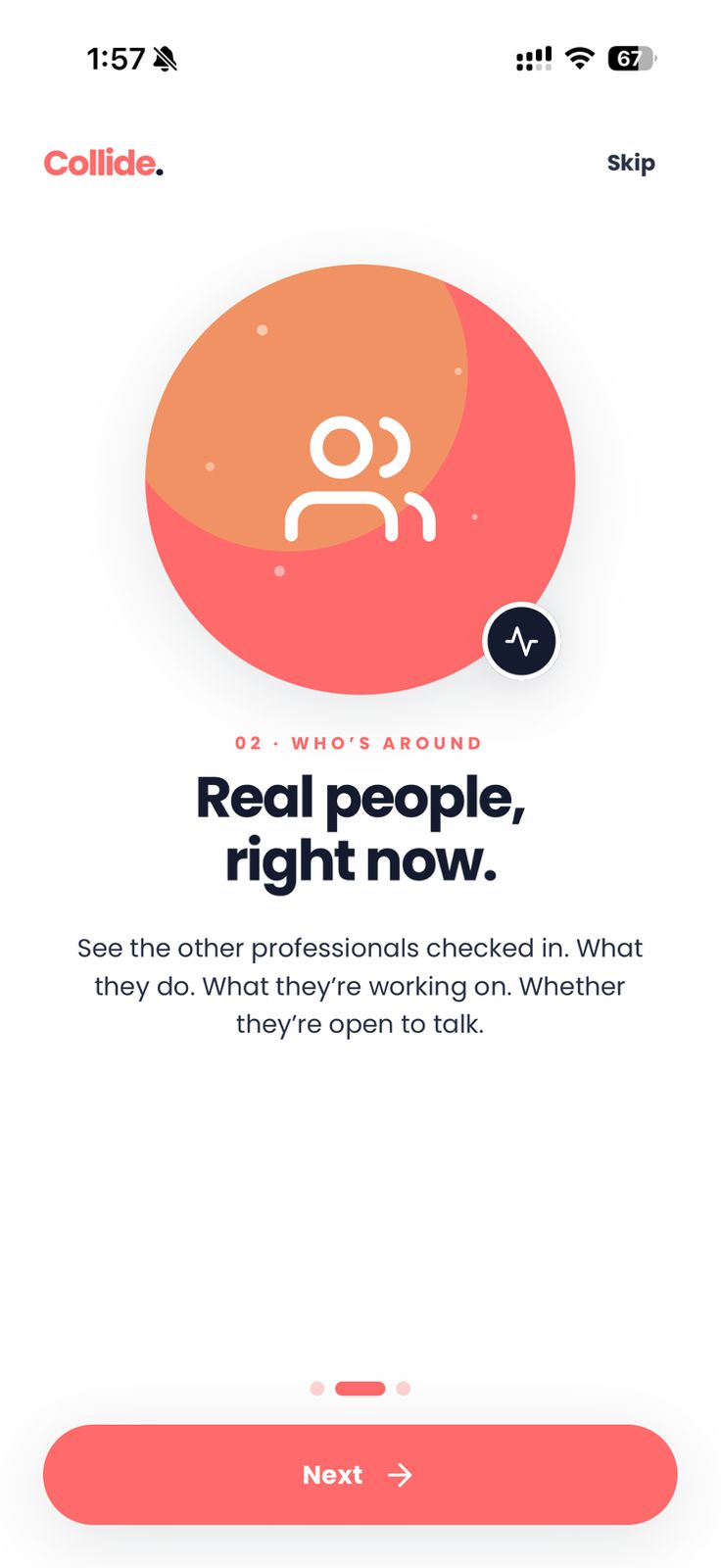
Three screens before sign-in set the terms the rest of the product keeps: be where you are, see who is actually around, and no cold messages ever.
Built once in React Native and Expo, shipping to iOS and Android from a single codebase, with Supabase carrying auth, data and live presence. Live on Google Play today; the App Store is next.